In healthcare, every minute counts, but payroll and compliance never seem to slow down. Shift differentials, credentialing information, mixed staff types, and evolving labor laws make accurate tracking and compliance a major challenge. Staying on top of every detail can feel impossible when you're also responsible for compliance, benefits, onboarding, and everything else that keeps your practice running, on top of patient care.
Up to $160,00
Wage and hour violations can cost healthcare providers over $160,000 in fines.
6 per 100 workers
Hospital employees face a higher rate of nonfatal injury/illness than workers in manufacturing or construction (6 per 100 workers), driven by the physical demands of lifting and moving patients
$1000+
Violations for misclassifying employees a independent contractors or exempt from overtime can cost $1000 or more.
Stay ahead of the regulatory requirements that keep physicians and practice managers up at night, so a compliance gap never turns into a lawsuit or a lost ability to bill.
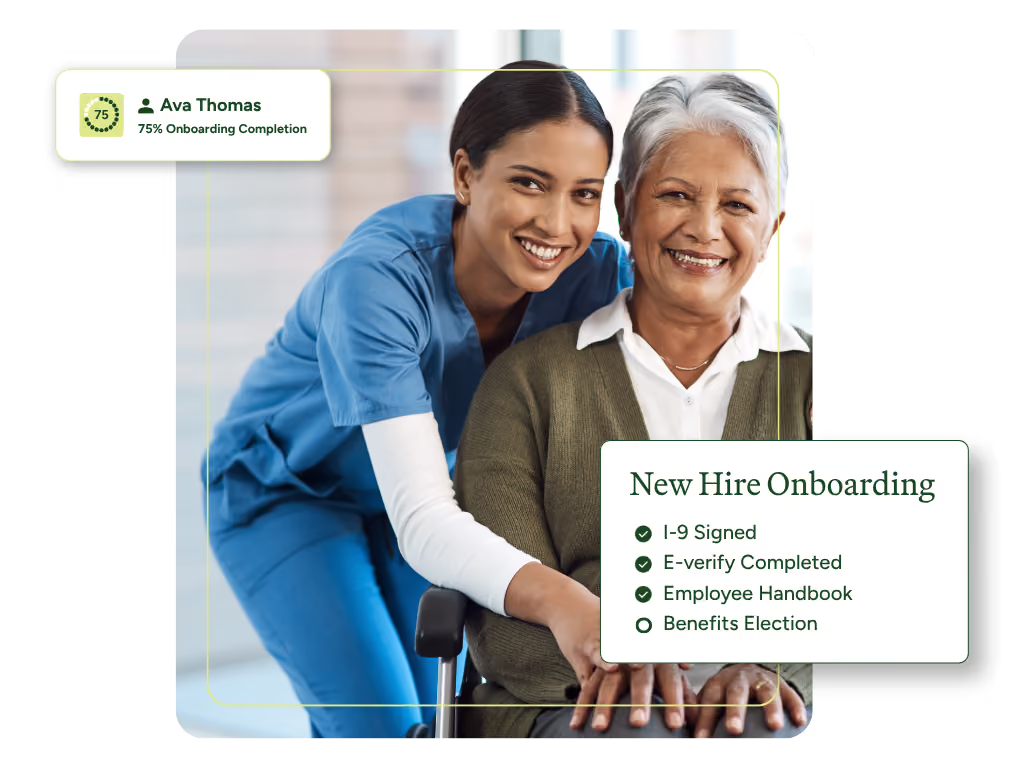
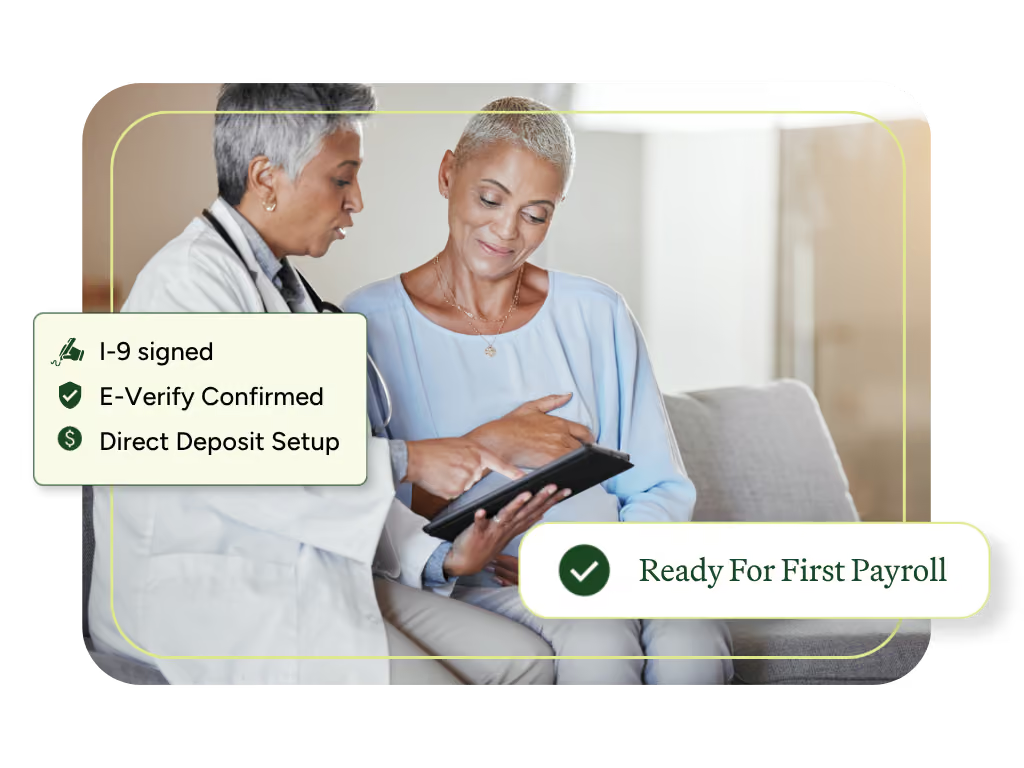
Streamline onboarding with I-9 and new hire reporting handled for you.
Lean on HR advisor guidance to stay ahead of broader healthcare compliance requirements.
Get license and credential information on file from onboarding, and mandatory training documentation.
Talent Acquisition & Retention for Clinical Teams
Win the staffing battle with tools built for how healthcare actually hires, and if you enter a PEO relationship, get the help you need to build a retention strategy from a dedicated HR expert.
Automate shift differential calculations so every employee is paid correctly, every time.
Handle blended overtime calculations for staff working multiple roles or rates, without manual recalculation.
Support multi-rate payroll across units and shifts, reducing your exposure to wage-and-hour claims and DOL audits.
Benefits & Pay for a Mixed Clinical Workforce
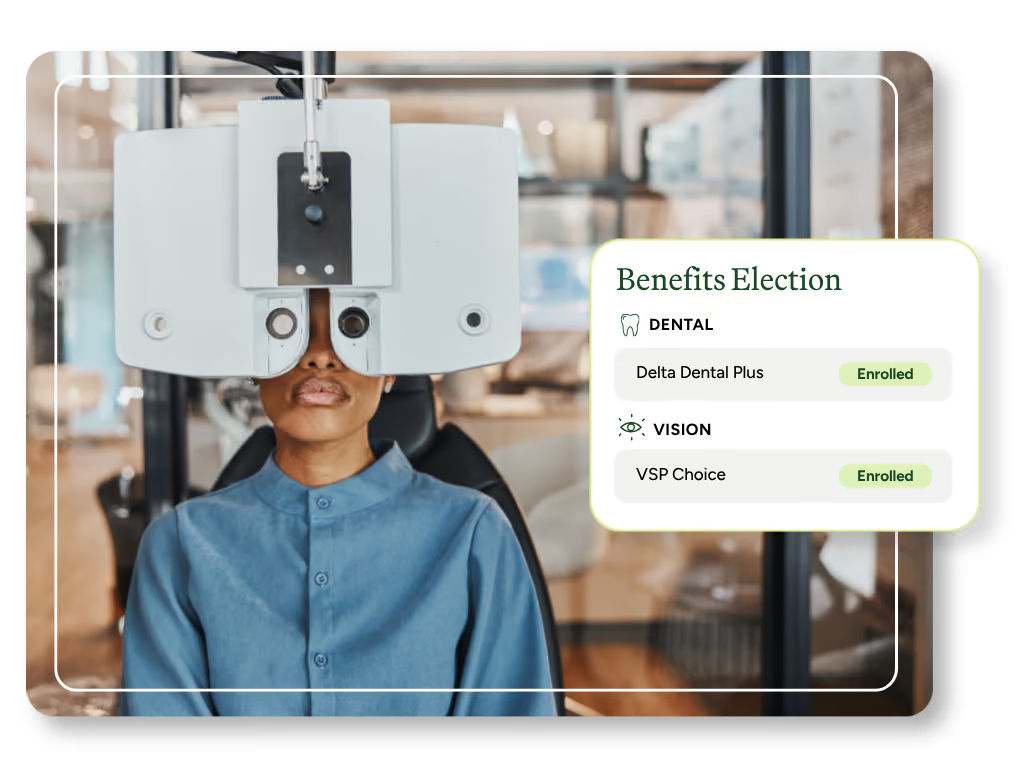
Offer competitive, flexible benefits, even if you're not a large health system, and handle pay correctly across your full mix of staff.
Access group and self-funded benefit options through a PEO relationship, built for practices that can't access enterprise-level plans on their own.
Get 1099 vs. W-2 classification support to reduce misclassification risk across a mixed workforce.
Automate shift differential and overtime calculations for varied healthcare staff.
Everything you need to know before you get started.
Payroll Software FAQs
How do you handle payroll for healthcare staff with multiple pay rates or roles?
Many clinical staff work across departments, shifts, or roles at different pay rates, such as a nurse who also picks up charge duty. Our system supports multi-rate payroll natively, so pay is calculated correctly no matter how many rates or roles an employee has in a given period.
Can your payroll system handle per diem and PRN staff?
Yes. Per diem, PRN, and variable-schedule staff are common in healthcare, and our payroll handles irregular hours, multiple pay codes, and inconsistent schedules without requiring manual workarounds each pay period.
How do you calculate overtime when an employee works in more than one role during the same week?
We handle blended (weighted average) overtime calculations when staff move between roles or pay rates within the same workweek. One of the most commonly miscalculated areas of healthcare payroll, and a frequent source of DOL audit findings.
Can staff access pay stubs, tax forms, and direct deposit info themselves?
Yes, employees get self-service access to pay stubs, W-2s, and direct deposit settings, reducing the number of routine payroll questions your HR or office manager has to field.
How often can we run payroll, and can different employee types be on different schedules?
Payroll frequency is flexible, and you can run different schedules for different employee groups if needed (e.g., biweekly for staff, monthly for contracted providers), without added complexity on your end.
How do you handle payroll taxes and filings across multiple states?
We manage state and federal payroll tax filings on your behalf, including SUI/SUTA where applicable. Which matters most for multi-state healthcare organizations, since filing requirements can vary significantly by state.
PEO Offering FAQs
Is a PEO right for a small medical practice, or only larger healthcare organizations?
PEOs work well for healthcare organizations of nearly any size. From single-location practices to multi-site clinics and long-term care facilities. If you're spending more time on HR, payroll, and compliance than on patient care, that's usually the sign it's worth exploring.
Can you handle multi-state HR and compliance for healthcare organizations with locations in different states?
Yes. Multi-state medical groups deal with different wage laws and licensure rules in every state they operate in. As your PEO partner, we consolidate that complexity so you're not managing separate systems or vendors state by state.
How does workers' comp work if we're not ready for a full PEO relationship?
You don't have to choose all-or-nothing. We offer pay-as-you-go workers' comp so you get competitive rates and coverage without a large upfront premium, and you can layer on full claims management and WC compliance support later if you move into a PEO relationship.
Do you handle credentialing, or just HR administration?
We support the administrative side of credentialing, onboarding, I-9 and new hire reporting, and HR advisor guidance to help you track licenses and certifications on file, so your managers aren't chasing paperwork every time someone starts or leaves. Clinical credentialing with licensing boards and payers remains with your organization.
What happens to our current benefits if we switch to a PEO?
Most healthcare organizations gain access to better benefits options through a PEO, not fewer, because you're pooled with other clients for buying power. We'll walk through your current plans and show you what's available before you make any changes.
Will switching to a PEO affect our staff's employment status or licenses?
No. Employees keep their same jobs, roles, and reporting structure. Under a PEO's co-employment model, we handle the administrative employer responsibilities (payroll, benefits, compliance) while you continue directing day-to-day clinical work. Licenses and credentials stay with the individual, unaffected by the employment structure.
What happens if we misclassify a contractor or run payroll incorrectly and it triggers a claim, can you help?
As your PEO partner, reducing that risk in the first place is the goal. Automated shift differential, overtime, and 1099/W-2 classification support are built to keep every pay period compliant. If a wage-and-hour or classification question does come up, HR advisor support is available to help you navigate it.
How quickly can we onboard new hires, especially during high-turnover periods?
Streamlined onboarding means new hires can be entered, credentialed administratively, and paid accurately from their first shift. Which matters most in healthcare, where units often can't afford onboarding delays during staffing shortages.
Let’s get to work
Your team. Your needs. HR that’s built for you.
HR is full of choices. We’ve got a plan that’s right for you.





.jpg)